
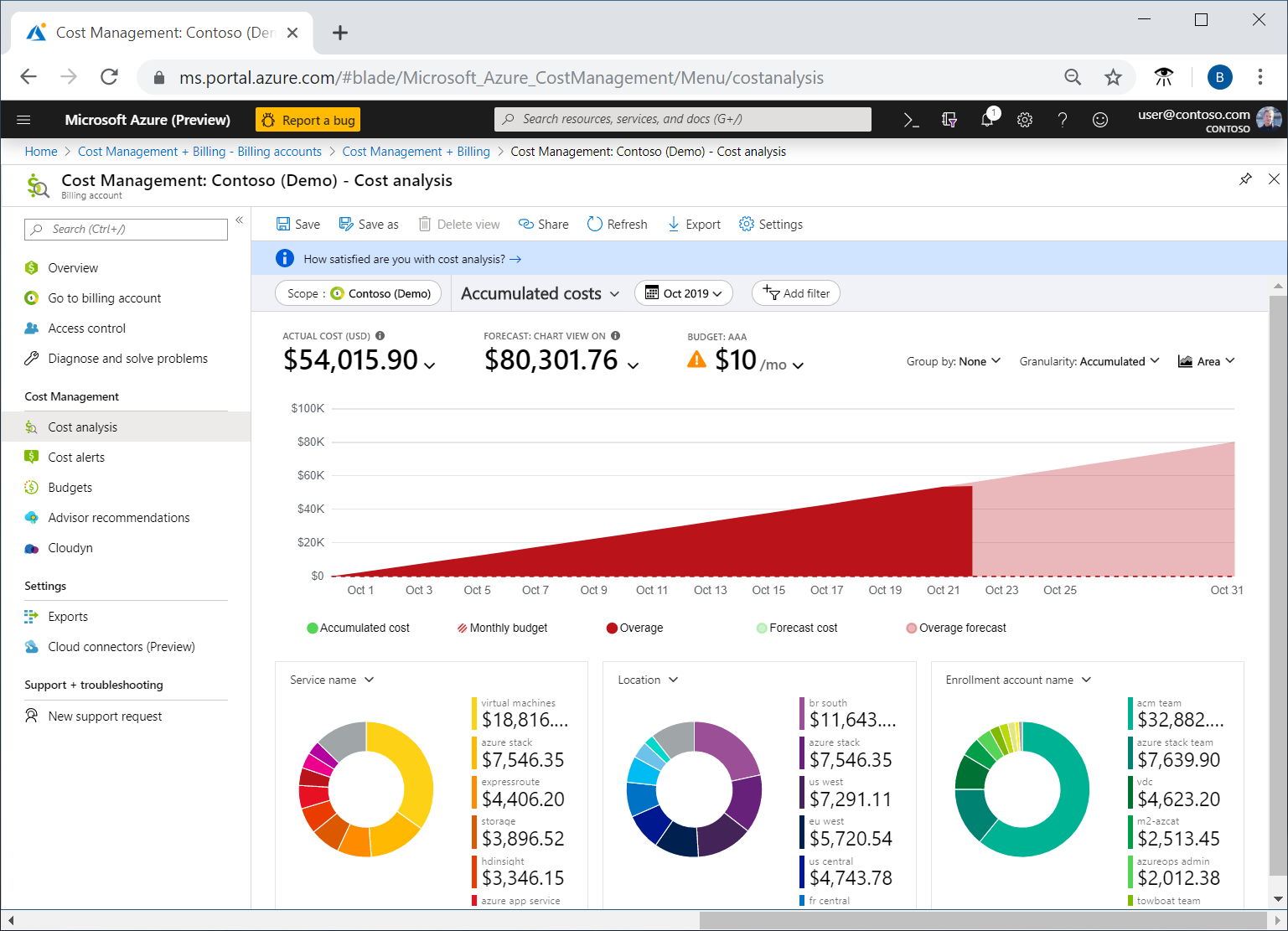
The cloud offers a variety of advantages for businesses, including increased scalability, agility, and cost savings. But without proper management, cloud costs can quickly get out of hand. Microsoft Azure provides users with a Azure cost management system that helps businesses get the most out of their cloud investments. Here’s what you need to know about managing your Azure costs.
Azure Cost Management Features
Microsoft Azure offers a suite of features designed to help you manage your cloud costs. These features include the following:
– Resource optimization – Microsoft Azure’s resource optimization feature allows you to identify and adjust your resource utilization to ensure that you are only using the resources necessary for your application or workload. This helps ensure that you are not wasting money on unused resources.
– Budgeting – You can set up budgets in Microsoft Azure so that you know exactly how much money you are spending on cloud services each month. This feature also allows for automatic alerts when certain thresholds are met or exceeded, so that you can take corrective action as needed.
– Reporting – Microsoft Azure provides detailed reports on usage and costs for all of your services in one convenient location. This makes it easy to track how much money is being spent each month and identify areas where cost savings could be made.
– Cost forecasting – Microsoft’s cost forecasting tool uses predictive analytics to help estimate future costs based on current usage trends, helping you plan more effectively for the future.
These features make it easier than ever to get the most value out of your cloud investment while staying within budget.
Optimizing Your Cloud Investment
In addition to leveraging the cost management features provided by Microsoft Azure, there are other steps that can be taken to optimize your cloud investment and reduce costs over time. One such step is moving from pay-as-you-go pricing models to reserved instances or committed use discounts (CUDs). Pay-as-you-go models can be beneficial in certain situations but often result in higher bills due to per hour charges associated with hourly usage spikes or peak times of day/week when demand is high. Reserved instances and CUDs provide a fixed monthly rate for predetermined amounts of compute resources which can save organizations significantly over time compared to pay-as-you go models due to reduced hourly rates associated with those plans. Additionally, taking advantage of free services offered by Microsoft such as Office 365 or Dynamics 365 could also save significant amounts over time if those services fit within an organization’s business requirements and goals.
Conclusion:
Managing your cloud costs is essential for ensuring that you get the most value from your investment in Microsoft Azure without exceeding budget constraints or paying more than necessary for compute resources or other services used in conjunction with using the platform itself (e.g., Office 365). By leveraging cost management tools provided by Microsoft as well as optimizing pricing models (e.g., reserved instances/CUDs) and taking advantage of free offerings available through Microsoft, organizations can reduce their overall cloud spend while still getting all the benefits offered by using the platform itself (e.g., scalability, agility). By taking these steps now, businesses can maximize their ROI from using Azure long into the future!